 Paws & Notes
Cat Carrier Training Before a Veterinary Visit
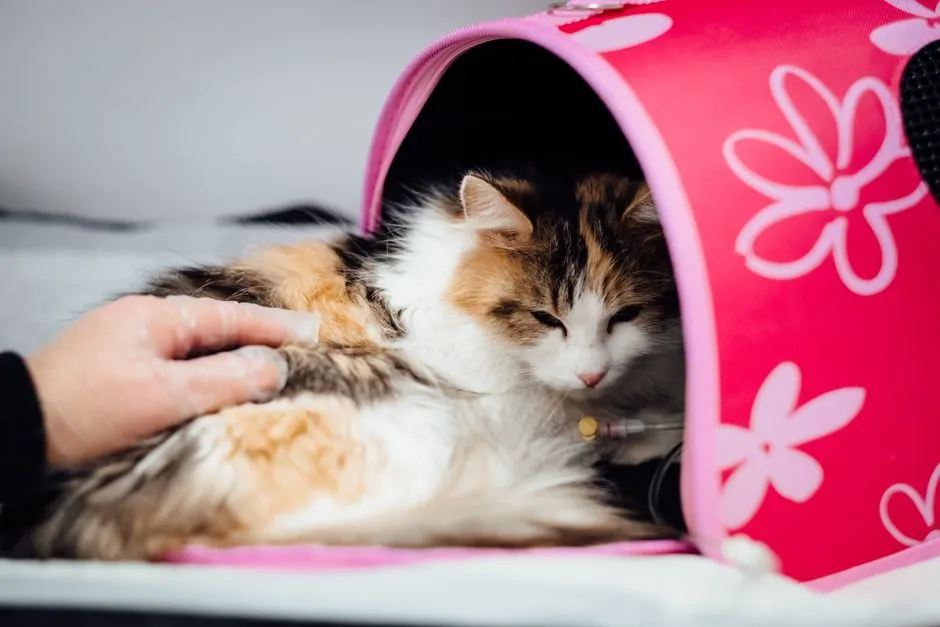
- How do you start cat carrier training?
- When should you call instead of practicing?
- Which carrier features help with practice?
- How do you make the carrier part of home life?
- What are the stages of carrier training?
- What counts as a useful reward?
- How do you record progress without inventing a deadline?
- What if the appointment is close and training is unfinished?
- How does training carry over to the journey?
- Sources
How do you start cat carrier training?
Start cat carrier training before an appointment becomes urgent. Leave the carrier accessible with familiar bedding, reward voluntary approaches and entry, and introduce closing and carrying only after your cat is comfortable with earlier steps. Do not force practice through fear or pain. Ask your veterinary team for an individual plan if progress stalls, and never delay needed veterinary care to finish training.
Paws & Notes covers preparation and observation. This guide is for gradual practice with a cat who is well enough to train, not for diagnosing illness, treating anxiety or deciding that a sick cat can wait.
When should you call instead of practicing?
Contact an emergency veterinary service immediately for breathing difficulty, collapse or unresponsiveness, severe bleeding, serious injury, suspected poisoning, or ongoing or repeated seizures. Do not label breathing difficulty as ordinary carrier anxiety. The Merck Veterinary Manual's emergency guidance identifies breathing difficulty, ongoing seizures, loss of consciousness, trauma and severe bleeding among problems needing immediate treatment.
For a possible poisoning, call a veterinarian or animal poison-control service immediately even if the cat currently appears normal; ASPCA Poison Control warns that effects can be delayed. Do not give medication or induce vomiting unless a veterinarian or poison-control professional directs you, consistent with AVMA guidance.
These examples are not a complete emergency list. If your cat is worsening, seems unwell or you are uncertain, call the veterinary team. Explain any transport difficulty during that call rather than trying to complete a training sequence first.
Which carrier features help with practice?
Use a sturdy, secure carrier that suits your cat and can be cleaned. A removable top lets the veterinary team access a cat who remains in the lower section; an accessible entrance also makes voluntary entry practical. The Feline Veterinary Medical Association's carrier guide discusses these features alongside ventilation and an absorbent, cushioned base.
Before involving the cat, check the manufacturer's assembly and closure instructions. Practice removing and replacing the top while the carrier is empty. Inspect the door, latches and joining points so a missing fastener is discovered at home, not during transport.
This is a preparation checklist, not a crash-test assessment or a product ranking. A familiar carrier with damaged closures is not ready for use. Ask the clinic about a suitable replacement or transport arrangement if its condition or fit is uncertain.
Keep food rewards within your cat's veterinary dietary instructions. Ask whether treats are permitted before a planned appointment, especially if the clinic has given specific feeding directions. Do not withhold meals to make the cat more willing to enter.
How do you make the carrier part of home life?
Choose a quiet, accessible location where your cat already spends time. Put familiar bedding inside and leave the entrance available for voluntary exploration. International Cat Care's veterinary-visit guide recommends keeping the carrier in the home as a resting place rather than bringing it out only for journeys.
If a removable top is part of the design, an open lower section can be an earlier practice stage. Reassemble it correctly before any carrying. Do not alter the structure or improvise a closure.
A practical household arrangement is to nominate one person to check the carrier and keep its removable parts together. Tell other caregivers which stage is being practiced. Otherwise, one person may leave the door open for familiarization while another assumes that every entry is an opportunity to shut it.
Keep the carrier accessible after the appointment too. Store the clinic's contact details separately where everyone involved in care can find them.
What are the stages of carrier training?
The FelineVMA veterinary-visit handout sets out a gradual progression from familiar bedding to being carried. Treat the following as stages, not a timetable:
| Stage | What you introduce |
|---|---|
| Familiar resting material | Encourage comfortable resting on familiar bedding |
| Carrier base | Place that bedding in the open lower carrier section |
| Assembled carrier | Add the top and allow comfortable voluntary use |
| Door closure | Introduce a brief closed-door period while the cat remains comfortable |
| Longer closure | Build duration gradually instead of making a large jump |
| Movement | Introduce lifting with support underneath, keeping the carrier level |
Allow your cat to become comfortable at each stage before adding another. There is no requirement to complete the table in one session.
Practice door closure and reopening only in a secure indoor room. Outside the home or during travel, do not open the carrier to let the cat out. If you cannot manage a closure exercise without struggling or frightening the cat, stop the exercise and ask the veterinary team how to proceed.
The important distinction is between entering, staying behind a closed door and being moved. Record them separately. An entry alone does not demonstrate that the cat is comfortable with the other two.
What counts as a useful reward?
Positive reinforcement means rewarding the behavior you want to see again. The FelineVMA training resource recommends choosing rewards the individual cat actually wants and giving them promptly after the behavior. Food is not the only possibility; some cats prefer play or gentle social contact.
For carrier practice, notice voluntary interest instead of requiring a complete entry immediately. A caregiver can reward an approach and later work toward entering, without pushing the cat through the door. That is a practical application of shaping: dividing a larger behavior into smaller parts.
The same veterinary resource says not to train a cat who is ill, in pain, hiding, growling or hissing. Stop practice and seek help as appropriate; do not punish those responses or continue escalating the task.
A refusal of one treat does not explain why your cat is reluctant. Record what happened and discuss concerns with the vet rather than diagnosing fear, nausea or pain yourself.
How do you record progress without inventing a deadline?
Use a short carrier-practice note, separate from medical instructions. It should identify the setup, what the cat did voluntarily, what changed and what you want to ask the clinic.
These are fictional examples of clear documentation, not results from a tested program:
| Vague note | More useful observation |
|---|---|
| “Carrier training went well” | “Walked into the open base; door was not attached” |
| “Ready for the vet now” | “Stayed inside with the top fitted; lifting not practiced” |
| “Hates the carrier” | “Backed away when I moved the door; I stopped practice” |
Do not convert the rows into a readiness score. They help another caregiver or veterinary professional understand what has actually happened.
If you keep a pet symptom log, record a health concern there and call the clinic as needed. A behavior observed near a carrier should not automatically be filed as a training problem.
What if the appointment is close and training is unfinished?
Call the clinic before departure and explain the exact barrier. “Will enter the base but backs away from the door” is more informative than “difficult cat.” Ask about an individualized loading, arrival and handling plan.
The FelineVMA guidance on your role at veterinary visits recommends discussing pre-visit support with the veterinarian and waiting for staff instructions before removing a cat from its carrier at the practice.
Useful questions include:
- What should we do if we cannot load the cat without a struggle?
- Are food rewards allowed before this appointment?
- Where should we wait on arrival?
- Which carrier parts should remain attached until staff are ready?
- Does this cat need a veterinarian-prescribed pre-visit plan?
Do not borrow another animal's medication, choose a sedative online or change a prescribed plan independently. Medication decisions belong to the veterinarian. The general appointment checklist covers records and questions; it does not replace individualized instructions.
How does training carry over to the journey?
Before leaving, check every closure and support the carrier from underneath when moving it. Keep it level. International Cat Care recommends one carrier per cat, including for cats who usually get along, and advises keeping carriers closed during travel.
Plan the vehicle arrangement using the carrier's instructions and the clinic's guidance. Keep ventilation unobstructed if using a familiar cover. Neither being accustomed to the carrier nor having a cover removes the need for secure transport.
At the practice, tell staff about unfinished training or handling concerns. Let them guide the next step rather than opening the carrier in a waiting area. Afterward, note which part of the trip needs discussion before another visit.
Success is a clearer, more manageable preparation process, not a guarantee that every journey will be quiet. Veterinary access remains the priority throughout.
Sources
- Merck Veterinary Manual: dog and cat emergencies
- ASPCA: what to do if a pet is poisoned
- AVMA: pet first aid
- FelineVMA: choosing a cat carrier
- International Cat Care: taking your cat to the veterinary clinic
- FelineVMA: visiting your veterinarian
- FelineVMA: positive-reinforcement training
- FelineVMA: your role in veterinary visits
Frequently asked questions
How long does cat carrier training take?
There is no fixed completion date for an individual cat. Work through familiar bedding, the carrier base, the assembled carrier, door closure and movement at a comfortable pace. Ask the veterinary team for help when progress stalls. An approaching appointment or a health concern requires a clinic plan, not rushed training.
Should I force my cat into the carrier during training?
Do not force a practice session through fear, pain or struggling. The goal is voluntary participation in manageable stages. If the cat needs veterinary care before training is complete, call the clinic for loading and transport guidance. Do not postpone needed care while waiting for the cat to finish a training program.
What if my cat enters but leaves when I touch the door?
Record that distinction: voluntary entry and comfort with door movement are separate parts of the task. Stop before the exercise becomes a struggle and ask the veterinary team how to make the next step manageable. Do not treat one successful entry as proof that the cat accepts closure or carrying.
Can I give calming medication before carrier practice?
Discuss medication with your veterinarian rather than choosing a product or using another animal's prescription. The vet should decide whether a pre-visit plan is appropriate for this cat and give its instructions. If a plan has already been prescribed, follow it exactly and ask the clinic about concerns or unclear directions.
When should I stop training and seek urgent help?
Seek emergency veterinary help immediately for breathing difficulty, collapse or unresponsiveness, severe bleeding, serious injury, suspected poisoning, or ongoing or repeated seizures. These are examples, not a complete list. Call a veterinarian for worsening or concerning changes, and never delay care to finish carrier practice or collect a training record.